
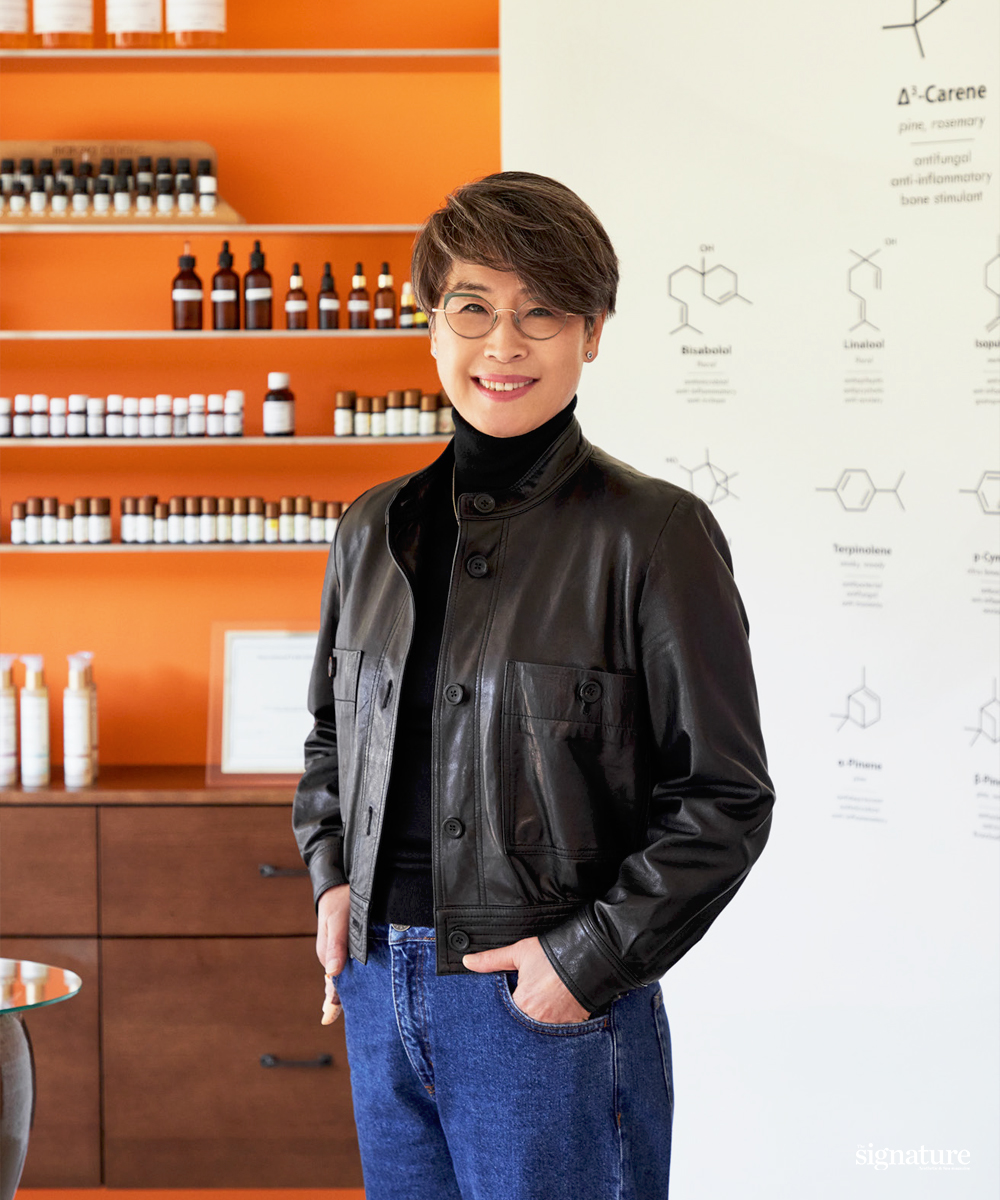
After leading a cosmetics company, Ha Yang-sun turned toward oncology esthetics and holistic support for people living with cancer. We spoke with the association’s chair about this change and the development of specialized practice.

Women’s Cancer Health Management and Prevention Association
Interview With Chair Ha Yang-sun
At the beginning of winter, we met a practitioner whose career offers a perspective on the therapist’s role. Ha Yang-sun chairs the Women’s Cancer Health Management and Prevention Association, supporting people navigating life with cancer. After entering the industry as a therapist and becoming a successful cosmetics-company CEO, she stepped away from that position. She introduced specialized esthetic care for cancer patients to Korea, establishing a center and training institution. Her holistic approach reflects years of practice and continued study. Following the association’s launch and relocation to larger premises, we discussed its work and approach to oncology esthetics.

Q What prompted the move from cosmetics leadership to oncology esthetics?
I entered the esthetic industry as a therapist in 1987. Over many years of meeting clients, I encountered people experiencing the distress associated with cancer. I increasingly saw the additional difficulties and changes that accompanied cancer treatment. This created a need for clearer, more specialized esthetic care. Although I took pride in the professional experience developed over time, no clear protocol guided my work with these clients. That uncertainty remained when meeting patients or training directors facing similar concerns. After establishing Ha Yang-sun Cosmetic, I continued sharing holistic cosmetics and therapy. Over time, my wish to study and communicate appropriate, comfortable care for people with cancer became stronger.
While studying aromatherapy through the Italian holistic brand Marzia Clinic, I learned about Oncology Training International™ and its specialized courses. I traveled to Italy and Canada for international oncology esthetics education. This marked the beginning of my focused work in the field. Seeing smiles during these treatments prompted renewed reflection on the therapist’s role. I completed the OTI Oncology Esthetics® Training diploma program. I then introduced the training to Korea to help therapists avoid inappropriate approaches when caring for clients with cancer.


Q What activities followed the association’s establishment?
In 2016, I established Oncology Esthetics Korea, described in the source as Korea’s first oncology esthetics center. We then began preparing an association, seminars, and broader activities. Various regulations created more obstacles than expected to formally introducing oncology esthetics within the industry. After several years of work toward incorporation with Ministry of Health and Welfare authorization, the association formally launched in 2022. We conduct clinical research into supportive approaches for physical and psychological difficulties experienced by people with cancer. International qualifications and specialist courses provide oncology esthetics training. Education and support form an integrated approach to women’s cancer-related wellbeing.
Our professional courses include Oncology Esthetics Intensive, a Canadian international qualification program, and the Aroma Lymphatic Tressage (ALT) Practical Course. We also offer Dr. Ha Yang-sun’s Integrated Aroma ALT Practical Course. Training audiences include estheticians, esthetic educators, prospective industry entrants, physical therapists, healthcare workers, and hospice personnel. Our recent expansion and relocation to Seongbuk-dong provide space for more structured specialist support in women’s cancer-related care.

Q What priorities shaped the new premises?
I wanted a restorative environment where people with cancer could receive oncology esthetics comfortably and experience genuine rest. The space also needed to support professional training and small events with collaborating organizations. Seongbuk-dong was recommended during our search. Its quiet, understated warmth felt consistent with our association, leading us to expand and relocate here.
Orange accents were selected to bring energy to everyone visiting. We also devoted considerable attention to a garden connecting physical and psychological restoration with nature. I personally sourced, planted, and tended trees and herbs. The intention was to create warmth and vitality for visitors, including people living with cancer.
To communicate professional commitment and pride, we framed clinical notebooks, pens, photographs, and books reflecting years of holistic practice. Diplomas appear throughout the premises. An aroma area, inspired by European apothecaries, allows visitors to experience essential oils used within oncology esthetics. These choices express the holistic philosophy and atmosphere we wanted to establish.

Q Which developments have been most satisfying?
As our center and association developed, I wanted to learn more about supportive approaches for discomfort and swelling associated with chemotherapy. Lymphatic massage became a particular focus. I returned to postgraduate study in integrative medicine at CHA University, pursuing master’s and doctoral work. With hematology and oncology clinicians at Korea University, I conducted clinical research involving breast cancer patients receiving taxane chemotherapy. We published two papers addressing pain and swelling. One examined the effects of an Aroma Lymphatic Tressage program on lower-limb edema and quality of life during taxane treatment. Its acceptance by an SCI-indexed international journal and presentation at a European breast oncology meeting were particularly meaningful achievements.
During this process, I also received individual integrative aromatherapy training from Dr. Luca in Italy. This year, we established the Integrated Aroma ALT qualification course. Small-group teaching develops integrated aromatherapy practitioners through an approach the association describes as immune-focused aroma education. We teach advanced knowledge and techniques for individualized aromatherapy consultations, including work with clients living with cancer. Clinical research has strengthened my confidence in communicating oncology esthetics within Korea. At the time of the interview, we had trained more than 270 professionals, and approximately 70 specialist salons operated nationwide.

Q What are the association’s future plans and vision?
The greatest satisfaction comes from seeing comfort and happiness return to clients’ expressions during supportive care. Some people describe profound discouragement amid chemotherapy-related swelling and discomfort. Hearing that Aroma Lymphatic Tressage helped them regain hope makes this work meaningful. Building the association brings daily challenges, but it also reinforces my commitment to oncology esthetics and pride in being a therapist. I am grateful that younger therapists share that commitment, and I want to create a stronger foundation for their development. We are gradually making our operations more systematic. Plans include expanded support for people facing cancer with limited resources or assistance, alongside seminars for healthcare professionals. We will continue researching and providing approaches that strengthen therapists’ ability to support physical comfort and emotional stability. I hope more therapists will join the association’s work.

Editor HYEMIN, LEE
Image Shutterstock
The Signature Magazine – January 2024 Issue
Leave a Reply