
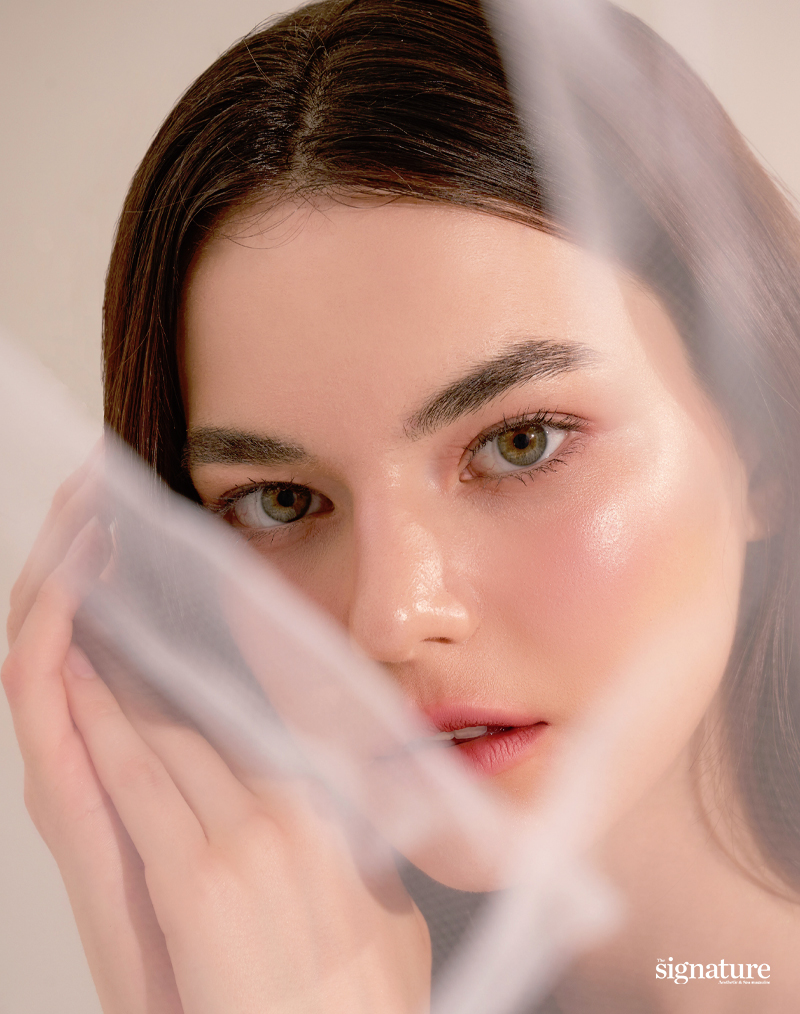
Attention is turning toward skin barrier repair built on skin capacity, rather than an approach that “conquers” the skin.

What the Era of Intense Stimulation Left Behind
High-concentration retinol, repeated chemical peels, high-output energy devices, and combined laser treatments once dominated the beauty market, delivering rapid cell turnover and visible results. But that acceleration came at a cost. Skin subjected to long-term, repeated high-intensity care pushed back in the form of chronic redness, reactive sensitive skin, and inflammaging (inflammation-driven aging).
The core issue was not the quality of individual treatments, but whether the skin was in a condition to withstand that stimulation. Intercellular lipids in the stratum corneum declined, aquaporin function weakened, and the undulating structure of the dermal-epidermal junction flattened. In this state, another corrective procedure resembles further breakdown rather than repair. The field has begun asking a new question.
Before treatment, is the skin actually ready to receive its effects?
The answer depends on skin capacity. Skin capacity is a concept encompassing barrier function, homeostasis, and resilience. It refers to the skin’s ability to maintain balance and recover after receiving external stimuli and active ingredients.

The Limits of the Stratum Corneum: Filling the Surface Isn’t Enough
The stratum corneum’s moisture-retention limit is not determined solely by ceramide or natural moisturizing factor (NMF) content, as commonly assumed. A more fundamental variable lies in the structural integrity of the dermal-epidermal junction (DEJ). This is the infrastructure that mediates moisture and nutrient exchange between dermis and epidermis. The stratum corneum functions as a storage space for moisture, but dermal-epidermal exchange plays a key role in maintaining that moisture environment.
When the supply route itself has collapsed, applying moisturizer to the surface of the stratum corneum accomplishes little. It is comparable to expanding storage space while the supply system remains broken. This structural dependency explains the fundamental limits of epidermis-only moisturizing care. Approaches that supply ceramide externally and apply NMF ingredients may be effective for temporary sensory improvement.
However, the corneocytes’ ability to synthesize lipids and NMF on their own depends on how well the DEJ functions. This ability reflects the proliferation and differentiation activity of epidermal basal cells. In skin where DEJ function has declined, the skin’s own maintaining power weakens after externally supplied ingredients are depleted. As a result, restoring skin capacity becomes difficult to achieve sufficiently. True barrier health should not start from the stratum corneum as an end product. It should begin instead by restoring the DEJ and basal cell environment, the production base that creates it.

01 Basement Membrane
A Channel for Hyaluronic Acid Circulation and a Gateway for Moisture Supply
In discussions of skin structure, the basement membrane and the dermal-epidermal junction (DEJ) are often used interchangeably, but strictly speaking they are distinct units. The DEJ refers to the entire junctional zone where epidermis and dermis meet. It is a composite structure spanning from epidermal basal cells through hemidesmosomes, the basement membrane, and anchoring fibrils (type VII collagen) to the dermis. The basement membrane is a specific structure located within the DEJ. It serves as a channel through which moisture, nutrients, and signals pass between epidermis and dermis. This distinction matters for barrier health because the two structures participate in moisture metabolism through different mechanisms.
The basement membrane is a porous, semi-permeable filter structure with nanometer-scale pores. It serves as the route through which hyaluronic acid (HA) synthesized in the epidermis exits to dermal lymphatic vessels. It also functions as the supply path through which dermal nutritional factors reach epidermal basal cells. Epidermal HA passes through the basement membrane and is continuously circulated and metabolized via the dermal lymphatic system.
When the basement membrane’s porous structure is damaged by aging or UV photodamage, this circulation route becomes blocked. Epidermal HA homeostasis is affected as well. As a result, the skin’s water-binding capacity decreases. The cause lies not in the stratum corneum, but in structural damage to the basement membrane deeper within the skin.
02 Dermal-Epidermal Junction (DEJ)
A Signaling Platform That Regulates Basal Cell Proliferation and Differentiation
At the level of the DEJ overall, a different mechanism operates than at the basement membrane. A healthy DEJ forms wave-shaped, undulating structures (rete ridges) where the epidermis projects into the dermis. This serves as a signaling environment that regulates basal cell proliferation and differentiation. This structure is composed of extracellular matrix proteins such as laminin, fibronectin, and type IV collagen. It provides the microenvironment in which basal cells can proliferate and differentiate normally.
As aging and repeated stimulation accumulate, this undulating DEJ structure gradually flattens. When the actual contact surface between epidermis and dermis decreases, basal cells receive insufficient proliferation signals. The speed and quality of the entire differentiation process, from basal layer to stratum corneum, then declines. This slowdown in differentiation triggers a chain reaction that undermines the self-sustaining foundation of skin capacity.
During normal basal cell differentiation, intercellular lipids including ceramide are synthesized, and natural moisturizing factor (NMF) is generated through filaggrin breakdown. In skin where the DEJ’s undulating structure has flattened, endogenous synthesis of both key components declines together. The skin may appear dry and rough on the surface. Its root cause, however, begins not in the stratum corneum but in changes to DEJ structure.

The Compound Collapse of Skin Capacity Caused by Basement Membrane and DEJ Damage
Basement membrane damage and changes in DEJ structure are not separate issues; they operate in ways that simultaneously reinforce each other. Basement membrane damage affects HA circulation and homeostasis, directly lowering epidermal water-binding capacity. Meanwhile, flattening of the DEJ’s undulating structure slows basal cell proliferation and depletes the skin’s capacity to self-synthesize lipids and NMF.
When both pathways collapse at once, the skin loses both its capacity to hold moisture and its capacity to replenish moisture on its own. This is also why moisturizing care focused solely on the stratum corneum surface fails to translate into sustainable strengthening of skin homeostasis. Restoring the structural integrity of the full DEJ, including the basement membrane, may serve as an important foundation for the skin to regain its ability to circulate moisture, synthesize lipids, and accommodate external stimuli on its own.

A Four-Step Skin Barrier Repair Strategy to Restore Skin Capacity
01 Restoring the Exchange Environment for Moisture and Signaling Through DEJ Support
The most fundamental step is restoring the DEJ’s structural stability. The DEJ is both a signaling platform that regulates basal cell proliferation and differentiation, and a gateway for hyaluronic acid circulation and nutrient supply via the basement membrane. When this structure is damaged, applying any high-performance ingredient on top of it yields only temporary effects. This holds true unless the skin itself has the capacity to use and sustain that ingredient. This step aims not for immediately visible change, but for building a foundation on which the effects of all subsequent steps can last.
The core of DEJ support lies in activating dermal fibroblasts and refining the extracellular matrix (ECM) environment. Fibroblasts are the cells that synthesize structural proteins making up the DEJ, such as laminin, fibronectin, and type IV collagen. When their activity declines, maintaining the DEJ’s undulating structure itself becomes difficult.
This is why signal peptides that directly stimulate fibroblast activity and ECM synthesis are applied as a priority. Hyaluronic acid, which may help improve the epidermal moisture environment, is used alongside them to immediately improve the moisture environment around the basement membrane. Panthenol supports basal cell regeneration. Vitamin C derivatives supply cofactors for collagen-synthesizing enzymes.
02 Opening Closed Cells and Awakening Aquaporins Through Moisture Supply
Once the DEJ environment has been addressed, the next step is supplying moisture to care for corneocytes hardened by chronic dryness and repeated stimulation. Applying steamers or friction at this stage is equivalent to adding further stimulation to an already damaged barrier, so moisture must be supplied to activate the cells’ own moisture channels and rehydrate corneocytes from within, without physical stimulation.
Ectoin and glyceryl glucoside, both intracellular osmotic-regulating molecules, are used as key ingredients. Ectoin is a molecule that organisms synthesize to protect cell membranes in extreme environments. It is known to form a stable moisture film around damaged skin cells, help maintain cellular water balance, and support the aquaporin-related water transport environment.
Glyceryl glucoside is a compound plants produce in response to drought stress, and studies have reported an association with increased expression of aquaporin-3 (AQP3). High-molecular-weight hyaluronic acid forms a moisturizing film on the skin surface that suppresses water evaporation. Mid-molecular-weight HA retains moisture within the stratum corneum. Low-molecular-weight HA passes partially through the stratum corneum to improve the moisture environment in deeper epidermal layers.
Applying all three molecular weights together can create a more multidimensional moisture environment from the skin surface to the deeper epidermis. However, since larger molecular weights are harder to penetrate the skin, microcurrent or sonophoresis may be used to enhance the delivery efficiency of active ingredients.
03 Lipid Rebuilding: Locking Moisture In
After moisture has been supplied, a step must follow to seal it in and prevent evaporation. Ceramide, cholesterol, and free fatty acids, the intercellular lipids of the stratum corneum, fill the spaces between corneocytes tightly, like mortar between bricks, forming a lamellar structure that blocks moisture evaporation. Skin in which this structure has collapsed cannot escape a “leaky roof” state, in which any moisture supplied evaporates quickly.
In lipid rebuilding, what matters most is not simply whether ingredients are present but the ratio in which they are combined. The skin barrier’s lamellar structure is known to form its most stable configuration when ceramide, cholesterol, and free fatty acids align at an approximate molar ratio of 3:1:1.
Standard emulsion creams mix ingredients without regard to this ratio, so they fail to reproduce the same lamellar structure as the skin barrier. This is why liquid-crystal emulsions and lamellar-structure-based formulas that mimic skin structure are drawing attention. During application, ingredients are absorbed using pressure as light as lymphatic drainage. This minimizes physical stimulation to an already sensitized barrier while guiding lipids to penetrate naturally into the intercellular spaces.
Ceramide, cholesterol, and fatty acids, which fill the spaces between corneocytes, form a layered lamellar structure like cement between bricks. Among these, the orthorhombic structure represents the most densely and stably aligned lipid arrangement, considered the ideal form for minimizing water loss and maintaining barrier function. This structure is clearly observed in healthy skin, but tends to collapse or appear incomplete in dry or sensitive skin.
04 pH Normalization and Microbiome Shielding
The final step in barrier rebuilding is stabilizing a surface environment in which the restored skin condition can be maintained. Healthy skin surface pH stays within a mildly acidic range of 4.5 to 5.5. Barrier enzymes, including serine palmitoyltransferase (SPT), a key enzyme involved in ceramide synthesis, are known to show higher activity in mildly acidic environments. The skin’s cycle of self-synthesizing lipids begins only once pH is normalized. In skin where pH has risen due to repeated stimulation and use of alkaline products, the efficiency of the skin’s own lipid synthesis may decline.
The care step recommended alongside pH normalization is restoring the skin microbiome ecosystem. Beneficial bacteria, including Lactobacillus species, coexist on healthy skin surfaces, suppressing overgrowth of harmful bacteria and indirectly supporting barrier function.
Repeated high-intensity treatments and excessive cleansing disrupt this ecosystem, creating a vicious cycle of skin sensitization and inflammatory response. Lactobacillus ferment and prebiotics create an environment favorable to beneficial bacteria. Postbiotics supply the metabolic byproducts that beneficial bacteria produce. Trace amounts of lactic acid help settle pH precisely within the mildly acidic range.
References
- Nakamura M. et al. “Basement Membrane Helps Maintain Epidermal Hyaluronan Content.” The American Journal of Pathology, 191(6). 2021.
- Cario-André M. et al. “Perlecan expression influences the keratin 15-positive cell population fate in the epidermis of aging skin.” Aging, 8(3). 2016.
- Rousselle P. et al. “The basement membrane in epidermal polarity, stemness, and regeneration.” arXiv (preprint of peer-reviewed review). 2023.
Editor GAHEE, BAEK
Image Shutterstock
The Signature Magazine – August 2026 Issue