
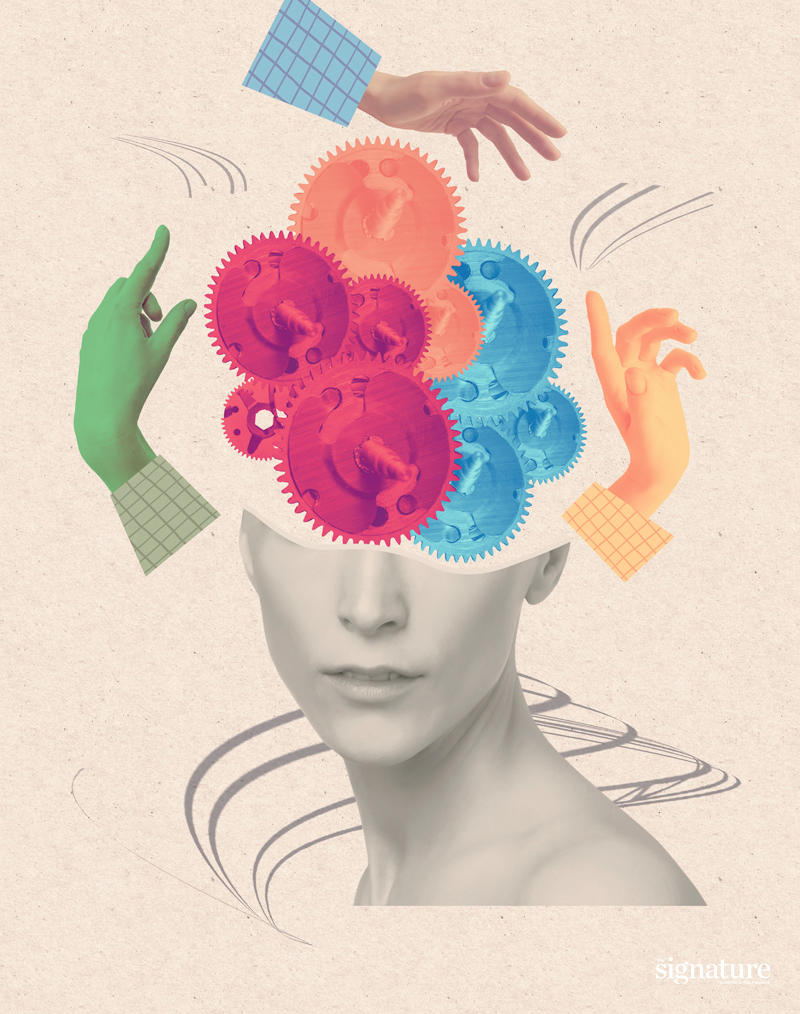
The knowledge base behind a program reflects the founder’s choices and capabilities. Its excellence depends on its origin and direction. My professional approach is to position body-care specialists within wellness through a women’s lifelong wellness perspective. Choosing what to study and continuing that study define my professional attitude. They may also mark the beginning of excellence.

The Knowledge and Professional Mindset Behind Exceptional Esthetic Programs
After many years in entrepreneurship and education, one question arises repeatedly: “What kind of program should I create?” In practice, founders often begin by selecting equipment, professional cosmetics, and the treatments recommended by those brands. They then promote the brands they use and adopt the brands’ prescribed programs. This was common practice until relatively recently.
Europe, widely regarded as the birthplace of esthetics, was no exception. Cosmetics opened the first door to the esthetics field. For a long time, estheticians may primarily have been professionals who handled specialized cosmetics. Today, the industry’s focus is shifting dramatically from cosmetics and skin toward the body. The COVID-19 pandemic in 2020 accelerated unavoidable changes. Clients have changed. They now manage themselves and understand their bodies more actively. In an era filled with biohackers, what preparation will create genuine professional excellence?
As I often explain, the word esthetics originates from the idea of perceiving through the senses. Cosmetics are among the most important tools for designing sensory experiences through an esthetician’s touch.
A distinctive program begins with an established professional persona: who the professional is. It also requires a clear philosophy, method, program, and understanding of client needs. One reliable framework is life-stage care, for which market demand already exists. Examples include care for babies, growing children, acne-prone skin, weddings, pregnancy, postpartum recovery, and menopause.
Viewed closely, this is simply women’s lifelong wellness care. In 2013, I introduced the Korean term for “women’s lifelong care” and organized a forum around it. The concept gained attention, and many spas began using it in promotional language. Within Korea’s K-Beauty professional sector, it reflected a broader shift from cosmetic services toward whole-body wellness. My intention in developing this lasting trend was straightforward. Professionals needed a deeper understanding of the human body. That required study.
The public message was that women receiving body care from professionals should never be considered a luxury. For professionals, the message concerned the depth of study required to provide responsible women’s lifelong wellness care.
The central question is not which program to create. It is what knowledge supports the program and who its clients are.
Spa programs often have different names but similar content. Common categories include lymphatic care, facial contouring, abdominal care, lower-body care, detox, fascia, firmness, and anti-aging. New names and movements appear, yet comparable programs continue to recur.
Considering the client’s perspective makes the underlying issue easier to identify.
– Does the selected menu address the client’s needs?
– How should I approach a consultation when a client requests slimmer upper arms?
– During consultations, do I clearly explain why, what, and how?
These questions begin with the client’s point of view.
When programs share similar knowledge foundations, consultations can easily center on price. However, an excellent opening consultation often makes price less decisive. Neuroscience also matters during consultation. The brain cannot process many tasks simultaneously. The professional must guide the client’s thinking toward a clearly presented direction. This is the “why.”
Professionals should become developers rather than simply adopting existing programs. A program developer differs from someone focused only on mastering techniques. Developers must explain why a treatment suits a client, what should come first, and which stimulus should be applied. They must also explain how outcomes will be evaluated. This requires a different level of study focused on understanding the body.
Beginning with this issue, I will discuss several fields of knowledge needed to develop personalized spa programs. The first is epigenetics in wellness, which may help explain the purpose of therapy.

Therapy Requires an Understanding of Epigenetics
Epigenetics is not simply about techniques that switch genes on and off. It examines how cells read their environment and translate it into function. That environment includes nutrition, stress, oxygen, metabolism, mitochondrial function, inflammation, extracellular matrix properties, and interstitial fluid. Together, these factors shape cellular structure and condition.
Epigenetics examines biological mechanisms that regulate gene expression without changing the DNA sequence itself. In accessible terms, it explores how the body’s internal environment may influence biological function and potentially affect future generations. It therefore offers a different perspective on genetic potential.
Prenatal care is often viewed as gentle management of maternal edema and stress. An epigenetic perspective instead considers the mother’s internal environment, including the extracellular matrix and fascia. This perspective frames prenatal programs as proactive support for maternal wellness and the child’s future development. It positions prenatal care around a “Baby First” philosophy.
The DNA inherited from parents remains relatively stable. However, the body’s environment is closely connected to how extensively particular genes are expressed. For this reason, epigenetics is more useful in our field when understood as the study of the internal environment.
What do we eat, how much do we move, and how well do we sleep? Which stresses recur, and how do blood glucose and hormones respond? When these questions and observations enter esthetic therapy, additional questions follow.
Are blood and tissue fluids moving effectively?
— Edema should be assessed.
What is the condition of the extracellular matrix?
— Its physical properties should remain responsive to appropriate stimuli.
Do tissues move flexibly?
— Healthy tissue should glide with flexibility.
Are breathing and movement sufficient?
— Breathing patterns can influence structural imbalance.
Observing these factors leads to further questions about their underlying causes. They collectively form the environment experienced by the body’s cells each day. Until now, professionals may have assessed themselves or clients primarily at the whole-body level. It is now necessary to interpret the environment from the perspective of the cells forming that body.
Therapy Changes When Cells Come Into View
Cells are surrounded by the extracellular matrix, or ECM. This space also contains interstitial fluid, capillaries, lymphatic vessels, nerves, and immune cells.
Cells, the ECM, interstitial fluid, blood, lymph, and nerves form an ecosystem that continually exchanges information. This network represents the fascia, including the skin. Understanding it changes even the meaning of the widely used term “circulation.” The concept therefore requires a more precise definition.
The body needs more than blood flowing through arteries and returning through veins. Oxygen and nutrients must reach cells. Metabolic by-products, excess interstitial fluid, and proteins must then be collected through the lymphatic system. Supply, recovery, autophagy, and programmed cell death all contribute to normal renewal. Lymphatic drainage provides a foundational framework for these processes and can clarify the value of esthetic therapy. Drainage involves removal, but it is ultimately an organized recovery process.
The Ultimate Goal: Personalized Programs
Professionals who understand lymphatic drainage recognize that edema is not simply an excess of water. In my cellular-level interpretation, it involves fluid shifting from intracellular to extracellular spaces. Interstitial fluid and proteins, capillary filtration, reabsorption, lymphatic recovery, tissue pressure, breathing, and muscle movement are interconnected.
Accordingly, drainage is more than a technique for reducing edema. It supports the body’s continuous processes of clearance and regeneration.
In physiological terms, this is a therapeutic approach to supporting fluid homeostasis in the extracellular environment. This understanding creates a clear distinction in program development. It allows professionals to explain the meaning of their work beyond beauty alone. Clients can then understand how esthetic care may complement foundational wellness within an appropriate professional scope.
For clients with recurring facial puffiness, the task is to explore why fluid repeatedly accumulates. Possible factors include movement, breathing, lifestyle habits, and hormonal changes. Professionals must also recognize when a concern exceeds their scope and requires medical evaluation. In my experience, edema can accompany the early stages of various health concerns.
A program interprets the client’s signs and establishes priorities for an appropriate esthetic intervention. This is the beginning of personalization and the practical meaning of customized care.

Detox Requires a New Definition
Detoxification begins with cellular processes already occurring throughout the body. The liver, kidneys, intestines, and lungs perform metabolic and excretory functions. The circulatory and lymphatic systems transport and recover substances produced in tissues. In this context, detoxification forms part of the cell’s natural life cycle.
Detox should describe conditions that support the body’s existing functions of supply, recovery, and regeneration. External techniques or devices may be used to support these conditions within an appropriate scope. In this sense, a carefully designed esthetic therapy can form one supportive stage of a broader wellness approach.
Focus on Mechanotransduction
Mechanobiology is a field that helped me clarify the meaning of my work. I did not want therapy reduced to vaguely defined healing or pain management. While exploring the significance of professional touch, I encountered a compelling body of research.
Mechanobiology examines how cells and tissues sense and respond to physical conditions. These include pressure, tension, shear force, stiffness, and movement. Cells were once thought to respond mainly to chemical signals, including hormones, nutrients, and inflammation. However, cells also detect tissue stiffness, mobility, sustained compression, and repeated stretching. This concerns the physical structure surrounding each cell. Cells continuously register that structure. What biological responses might follow when precisely designed touch is applied?
This question ultimately returns us to epigenetics in wellness.
Physical information travels into cells through mediators such as integrins. It can reach the nucleus and influence gene expression and cellular behavior. This process is called mechanotransduction. Integrins are membrane protein receptors connecting the external ECM with the internal cytoskeleton. They can be understood as antennas enabling communication between a cell’s exterior and interior.
Where Epigenetics and Therapy Meet
Cells regulate their functions while sensing oxygen, nutrients, inflammatory signals, hormones, ECM properties, mechanical tension, and pressure. If the ECM foundation is compromised, even well-designed stimuli may produce variable responses. This variability also appears after clinical interventions, including injections. One relevant factor may be the tissue’s capacity to translate mechanical signals at the cellular level.
Mechanotransduction converts mechanical conditions, such as tissue stiffness and tension, into biological signals. I believe individual differences in processing these signals may relate to variable therapy responses. The same stimulus may produce different responses depending on age and tissue properties. Experience involves more than sensory memory in the hands. Professional expertise also requires organizing and systematizing that accumulated knowledge.
Adhesions, fibrous resistance, and nodules felt through the fingertips are more than matters of texture. They can also reflect conditions at the cellular level.
Women’s Bodies Require Greater Attention to Their Internal Environment
This perspective is especially important for women’s bodies. Women do not remain within one endocrine environment throughout life. Conditions change across puberty, menstrual cycles, pregnancy, childbirth, postpartum recovery, and menopause. These stages affect estrogen, progesterone, metabolism, body fluids, muscles, bones, fat distribution, skin, and connective tissue. The same woman’s biological environment differs at ages 30 and 50.
This is why professional study must continue to deepen. Programs should be personalized for the woman’s current biological life stage. Practitioners must recognize that stage and design an appropriate sensory experience.
Excellence Does Not Happen by Chance
This series distinguishes standardized offerings from premium programs through this perspective. The market often follows trends. New equipment produces equipment-centered programs, while popular ingredients produce ingredient-centered programs. This approach can become predictable. Becoming the market leader is difficult. However, a professional can still offer something meaningfully new to each client.
This is the competitive strength of a program developer. Studying epigenetics does not require becoming a geneticist. However, professionals should understand the questions it raises and continue investigating the underlying “why.”
Raising the level of knowledge used to understand the body defines a professional attitude toward the field. Excellence begins there.

Editor Junghyun, Park
Image Shutterstock
The Signature Magazine – September 2026 Issue