
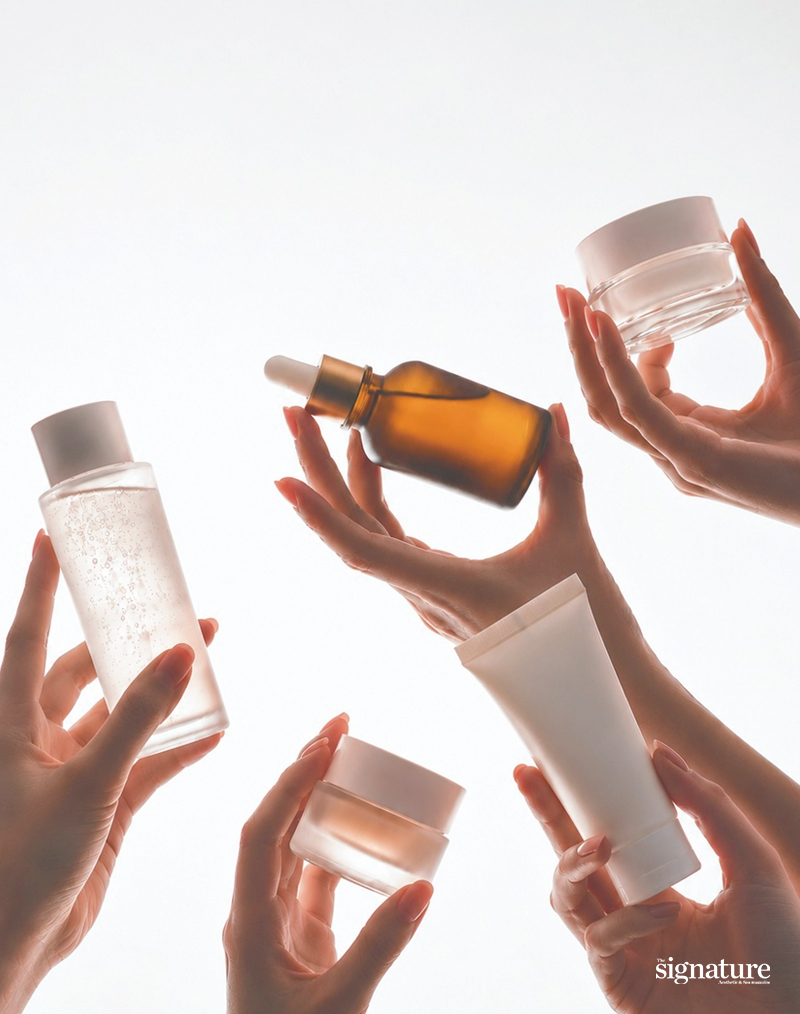
Price, ingredients and efficacy are easy to compare today. The more products with similar functions flood the market, the more demanding consumers’ reasons for buying become. What will consumers spend on in the 2030s?

Why Consumers Need a Reason to Choose, Not Just Novelty
New ingredients and products launch every year, yet some products are used again and again at the vanity table. As products with similar functions and concepts multiply, novelty alone rarely sustains differentiation for long.
Global management consulting firm McKinsey & Company published its 2026 State of Beauty report. It projects that four core markets, skincare, haircare, color cosmetics and fragrance, will grow about 5% annually to reach roughly $590 billion by 2030.
This article also draws on the latest data from Mintel, Circana and Euromonitor International. It examines how beauty industry trends may reshape consumer choice criteria by 2030.
As the market grows, the criteria for choosing products are becoming more segmented. Consumers no longer accept a high price simply because a product is premium; they ask whether the cost is justified. They also look beyond new ingredients to whether a function is needed, which concern the product targets, and whether evidence supports the results.
How consumers find and use products is changing as well. Value for money, evidence of efficacy, simple routines, wellness, digital discovery and sensory experience are emerging as the main criteria for future choices.

01
The Premium Price Formula Is Losing Ground
The belief that a higher price means a better product has lost some of its force. McKinsey noted that the perception of premium as high performance has weakened in skincare. Skin science-based brands and K-beauty, offering efficacy and credible evidence at relatively lower price points, have widened the choices. K-beauty refers to skincare and cosmetics from South Korea, where online shopping and ingredient-focused skincare are widely established. Finding products with desired functions outside premium brands has become easier.
Ingredients, efficacy and real-world user experience are now easy to compare. Brand recognition or price alone can no longer define a product’s value. The same survey found that about half of consumers worldwide buy both premium and mass-priced products. This skincare consumer behavior reflects a split in spending priorities. Everyday products are chosen at affordable prices. Spending rises for products such as serums, which focus on key skin concerns or show noticeable performance differences.
Daiso Beauty is another example of this shift. Daiso is a Korean variety-store chain known for low prices. Alongside demand for value at accessible prices, Daiso Beauty sales rose 70% year on year in 2025. Notably, brands did more than lower prices: they designed price tiers through separate Daiso-specific lines, simplified sets and packaging.
Going forward, the value a product offers at a given price is likely to matter more than the price itself. Showing that value concretely may strengthen price credibility, through ingredients and formulations used in professional treatments, volume, packaging and links to at-home care.
02
The Next Stage of Ingredient Competition: Evidence and Efficacy
As ingredient information becomes abundant, a “contains [ingredient]” claim no longer sets a product apart. Global trend analysis firm Mintel recently noted that consumers are more skeptical of exaggerated claims and demand evidence for product claims. Product descriptions are therefore expected to go beyond what was added.
They should explain why an ingredient was chosen, which skin concern it targets and what change users can expect in actual use. Objective data such as clinical studies or consumer usability evaluations should support these points, in line with demand for clinically proven skincare.
The growth of K-beauty overseas also reflects this change. Global market research firm Circana reports that K-beauty sales in U.S. prestige retail rose 23% year on year in Q1 2026. Unit sales rose 24%. Explaining this growth, Circana pointed to biotechnology-based ingredients, dermatological validation and interest in barrier health.
The basis of competition is shifting from adopting new ingredients quickly toward showing the targeted skin concern and expected change. Professional treatment products likewise need to show concretely which step they serve and why that role can be explained. When ingredient selection, confirming efficacy and communication of results connect in one flow, objective data also becomes a criterion for judging product value.

03
Skin That Stays Healthy Longer, Not Just Today
Wellness is expanding to cover many areas of daily life, from eating and sleeping well to caring for skin and body condition. In a 2025 McKinsey global consumer survey, over half of respondents said beauty means feeling confident. Loving oneself and caring for body and mind beyond appearance followed. Beauty is accordingly extending into wellness-adjacent areas such as functional nutrition, sleep management, supplements and at-home care devices.
Views of skin are also changing. Metabolic beauty is a core trend in Mintel’s 2026 global beauty outlook. It views skin and hair as indicators of overall bodily condition, not merely objects of appearance care. Mintel anticipates that biomarker measurement, metabolic monitoring and personalized technology may combine with beauty by 2030. Longevity science, which focuses on keeping skin condition healthy over the long term, is also drawing attention as a new skincare trend. Care now extends beyond immediate visible change to how long skin condition can remain stable.
Looking ahead, skincare is likely to consider lifestyle factors linked to skin condition, such as sleep, nutrition and stress. During periods of sleep loss or ongoing stress, care could focus on stable hydration and skin barrier condition rather than pursuing strong changes. Professional treatments should look beyond the state right after a session. How skin condition is sustained until the next session, together with at-home care, also deserves consideration. Products, likewise, may need to support stable skin condition in daily life, not only immediate change.
04
Shorter Routines, Clearer Product Roles
As ingredients and functions diversify, weighing every step of a routine has become complicated. Rather than adding steps out of habit, consumers choose products for a purpose and consider which steps one product can remove. They weigh what can be taken away, not just what to add.
Changes in color cosmetics are also notable. McKinsey expects hybrid products that combine skincare functions to support growth in color cosmetics. Examples include tinted moisturizers with sun protection and color lip products with added moisturizing ingredients. Color products thus carry skincare elements alongside their core function. A similar pattern appears in skincare.
One product increasingly covers a wider role, such as combining hydration and barrier care, or refining skin texture while hydrating. The key is clarity on which routine step a product reduces, rather than how many functions it holds. Examples include a single product serving as both toner and essence, or handling post-treatment hydration and barrier care in one step. Reducing overlapping steps between in-salon treatment and at-home care may become important. So may how a single product connects the periods before and after treatment.

05
Which Cosmetics Will Artificial Intelligence Recommend?
As product selection changes, the channels that shape skincare consumer behavior, from search to comparison, matter more. According to global market research firm Euromonitor International, online accounted for 35.7% of global skincare sales in 2025. The share is projected to rise to about 40% by 2030.
Korea’s online share of skincare sales already stood at 67.8% in 2025, higher than China’s 52.2% and Japan’s 21.4%. Skincare, where information on ingredients and functions is easy to research and compare, has seen rapid online search and purchase adoption. Recently, not only where consumers buy but how they find and compare products has changed. Euromonitor analyzed beauty and personal care as a consumer category with especially active AI-based product search in 2025. A March survey that year found that 28% of online shoppers used generative AI for product recommendations.
Searching a skin concern or desired function now returns multiple products for comparison and recommendation at once. Brands’ product information therefore needs to be clearer. It helps when the concern addressed, key functions and ingredients, and supporting evidence appear clearly in product names and detail pages. The more consistently information in search results and recommendation screens aligns, the easier it is for AI-based discovery to identify product features. Going forward, it will matter to consider not only the product itself but also how it is introduced and searched online.
06
Scent, Texture and Feel as One Experience
If efficacy and price are key selection criteria, the feeling a product gives during use also matters more. Mintel describes this as “sensory synergy.” Mintel links sensory elements such as scent, touch and sound to emotional wellness. It expects selection criteria to extend from function to the experience felt during use.
The growth of the fragrance market is a leading example of interest in sensory experience. McKinsey expects fragrance to become the third-largest of the four core beauty categories, overtaking color cosmetics. It sees relatively steady growth continuing across price tiers. Ways of enjoying fragrance are also growing more segmented, from layering scents to choosing different ones by time of day and situation.
Brands may do well to consider the sensation a product delivers, rather than designing scent and texture separately. Sensory experience can include elements encountered repeatedly in use, such as scent strength and lingering, formulation viscosity and absorption speed, and container structure. A brand emphasizing a fresh image, for example, might align a light texture, fast absorption and a subtle scent with a single concept. As the user experience flows naturally, the image a brand wants to convey may become clearer.
References 1. McKinsey & Company. “From Aisle to Algorithm: The Beauty Categories, Channels, and Concepts Shaping 2030 Growth.” 2026. 2. Mintel. “2026 Global Beauty and Personal Care Predictions.” 2026. 3. Circana. “The Second Coming of K-Beauty: Korean Skincare’s US Comeback.” 2026. 4. Euromonitor International. “Digital Beauty: Accelerating Skin Care Online Sales.” 2026.
Editor JIWON, YANG
Image Shutterstock
The Signature Magazine – October 2026 Issue